

A sliding glass door should open and close smoothly without sticking, scraping, or requiring excessive force. However, over time, dirt, worn components, damaged rails, and everyday use can affect its performance. As a result, even a high-quality sliding door may become difficult to operate. Fortunately, professional sliding door track repair can restore proper movement, improve convenience, and help prevent more serious door damage.
For homeowners throughout South Florida, a properly functioning sliding door is especially valuable. Sliding doors provide access to patios, balconies, pool areas, and outdoor living spaces. Moreover, they allow natural light into the home while helping create a more open atmosphere. Therefore, when a door begins to drag or jump off its track, addressing the problem promptly can make a significant difference.
At SFL Sliding Doors, homeowners can explore solutions for common sliding door problems, including damaged tracks, worn hardware, and other operational issues. Whether your door needs cleaning, adjustment, or more extensive repairs, understanding the cause is the first step toward choosing the right solution.
Why Sliding Door Track Repair Matters
The track is one of the most important components of a sliding glass door system. It guides the door panel along a designated path and works with the rollers to support smooth movement. Consequently, when the track becomes dirty, bent, corroded, or worn, the entire door may stop functioning correctly.
Although some problems initially appear minor, ignoring them can lead to additional wear. For example, forcing a door along a damaged rail may put unnecessary pressure on its rollers, frame, and hardware. Eventually, a relatively simple repair may become more complicated.
Professional sliding door track repair and cleaning can help address these issues before they interfere further with daily use. In addition, a proper inspection can reveal whether the track itself is responsible or whether another component is contributing to the problem.
 Common Signs Your Sliding Door Track Needs Repair
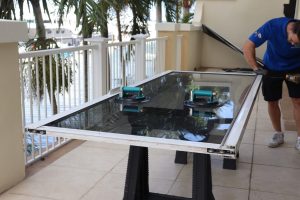 Common Signs Your Sliding Door Track Needs Repair
Recognizing the warning signs early can help you avoid unnecessary frustration. Therefore, pay attention to how your sliding door moves and sounds during everyday use.
- The Door Is Difficult to Open or Close
If your sliding door suddenly requires extra effort, the track may contain dirt, debris, or damaged sections. Alternatively, worn rollers may prevent the panel from gliding correctly. In either case, forcing the door is not a reliable long-term solution.
- The Door Makes Grinding or Scraping Sounds
Unusual noises often indicate friction between moving components. For instance, damaged rollers may scrape against the rail, while accumulated debris can interrupt smooth movement. Consequently, an inspection can help determine whether cleaning, adjustment, or component replacement is necessary.
- The Door Jumps or Moves Unevenly
A sliding panel should remain stable as it moves. However, a damaged track or malfunctioning roller assembly may cause the door to wobble, jump, or move unevenly. Since this can affect safe operation, professional attention is advisable.
- The Track Looks Bent, Worn, or Corroded
Visible dents, uneven surfaces, and corrosion may interfere with the rollers. Furthermore, exposure to moisture and frequent use can gradually affect metal components. If the rail has sustained significant damage, ordinary cleaning may not be enough.
- The Door Frequently Gets Stuck
Repeated sticking is a sign that something is interfering with the door’s movement. Although dirt may be responsible, worn hardware or alignment problems can create similar symptoms. Therefore, identifying the actual cause is more effective than repeatedly forcing the panel open.
What Causes Sliding Door Track Problems?
Several factors can contribute to track damage and poor door performance. Understanding these causes makes it easier to determine the appropriate repair.
| Common cause | How it affects the door | Recommended approach |
| Dirt and debris | Blocks smooth roller movement | Thorough track cleaning and inspection |
| Worn or damaged rollers | Causes dragging, noise, or uneven movement | Inspect and repair or replace affected rollers |
| Bent or damaged rails | Prevents the panel from moving evenly | Assess track damage and determine repair options |
| Corrosion and moisture exposure | Deteriorates track surfaces and hardware | Inspect affected components and repair as appropriate |
| Misalignment | Causes sticking or uneven gaps | Check panel positioning and adjust where suitable |
| Damaged door hardware | Interferes with movement and stability | Inspect and repair faulty components |
However, symptoms can overlap. For example, a door that sticks may have both a dirty track and worn rollers. Consequently, a complete assessment is often more useful than treating the visible problem alone.
How Professional Sliding Door Track Repair Works
Effective repair begins with identifying the underlying cause. Rather than immediately replacing parts, a professional can assess the track, rollers, door alignment, and related hardware to determine which components need attention.
Step 1: Inspect the Track and Door Panel
First, the technician examines the track for debris, dents, corrosion, worn areas, and other visible damage. The door panel is also checked for uneven movement and alignment issues. As a result, the inspection helps establish whether the problem is related to the rail, rollers, or another part of the system.
Step 2: Remove Built-Up Dirt and Debris
Next, accumulated dirt, sand, and other debris may be removed from the track. This is particularly useful when the door has become difficult to operate because of restricted roller movement. Nevertheless, cleaning alone will not correct a bent rail or a severely worn component.
Step 3: Assess Rollers and Related Hardware
Afterward, the rollers and supporting hardware should be checked for wear, damage, and improper positioning. Since these components work together, a problem with one part can affect the performance of the entire door.
When the issue involves faulty locks, handles, or other mechanisms, broken sliding door hardware repair may also be relevant.
Step 4: Repair or Replace Damaged Components
Once the cause is identified, the appropriate repair can be determined. Minor issues may require cleaning or adjustment. Conversely, a badly damaged track or worn component may need more extensive work. The right approach depends on the door’s design, the extent of the damage, and the condition of the surrounding parts.
Step 5: Test Door Movement
Finally, the door should be tested to confirm that it moves smoothly and remains properly aligned. In addition, the technician can check whether the original symptoms have improved and whether any related issues remain.
Sliding Door Track Repair vs. Track Replacement
One of the most common questions homeowners ask is whether a damaged track can be repaired or needs replacement. The answer depends on the condition of the rail and the overall door system.
| Factor | Track repair | Track replacement |
| Minor surface issues | May be suitable | Often unnecessary |
| Dirt and debris | Cleaning may resolve the problem | Usually unnecessary for dirt alone |
| Limited damage | May be possible, depending on the rail | Considered if repair is unsuitable |
| Severe bending or deterioration | May not provide a reliable result | May be the more appropriate option |
| Overall cost | Depends on labor and required parts | Depends on materials, labor, and installation |
| Long-term outcome | Effective when the underlying issue is correctly addressed | Can restore the rail when existing damage cannot be adequately repaired |
Therefore, homeowners should avoid assuming that every difficult-to-open door needs a completely new track. Similarly, repeatedly cleaning a severely damaged rail may not solve the problem. A professional assessment helps determine the most practical option for your specific door.
Benefits of Timely Sliding Door Track Repair
Taking action when a problem first appears can provide several practical benefits.
Smoother Everyday Operation: First, correcting track problems can make opening and closing the door easier. Consequently, everyday access to patios and outdoor spaces becomes more convenient.
Reduced Wear on Other Components: Moreover, a damaged track can place additional strain on rollers and related hardware. Addressing the underlying problem may help prevent unnecessary wear on these components.
Improved Door Stability: In addition, correcting alignment and track issues can help the panel move more consistently. However, any door that appears unstable should be inspected before continued use.
Better Use of Existing Doors: Repair may be a practical alternative to replacing an entire door system when the frame, glass, and other major components remain in suitable condition.
Greater Peace of Mind: Finally, resolving sticking, scraping, or uneven movement helps restore confidence in daily door operation. Nevertheless, track repairs should be accompanied by checks of any other damaged components that affect safe operation.
Why South Florida Homeowners Should Maintain Sliding Door Tracks
South Florida homes frequently feature sliding glass doors that connect indoor living areas with patios, balconies, gardens, and pool decks. However, these doors may encounter sand, dust, moisture, and frequent use. Over time, these conditions can contribute to track contamination and component wear.
Furthermore, doors near outdoor spaces may collect debris more quickly than doors in less exposed locations. Consequently, periodic inspection and cleaning are useful parts of routine maintenance.
Although environmental exposure varies by property, homeowners should watch for signs of corrosion, restricted movement, and damaged hardware. If a door becomes harder to operate after a period of normal use, it is better to investigate the cause instead of continuing to force it.
For broader operational problems, professional sliding door repair services can help homeowners address issues beyond the track itself.
DIY Track Cleaning or Professional Repair: Which Is Better?
Some minor track problems can be addressed through routine household maintenance. For example, homeowners can remove loose debris with a vacuum and wipe accessible surfaces with a suitable cleaner. However, more serious damage requires a different approach.
| Situation | DIY maintenance | Professional service |
| Loose dirt on an accessible track | Usually suitable | Optional if the problem persists |
| Repeated sticking after cleaning | May not resolve the cause | Recommended |
| Bent or visibly damaged rail | Not recommended as a repair project | Recommended |
| Door jumping off its track | Avoid forcing the panel | Recommended |
| Damaged rollers or hardware | Depends on skill and door design | Recommended when diagnosis or disassembly is needed |
| Heavy or unstable glass panel | Avoid handling alone | Strongly recommended |
Above all, safety should come first. Sliding glass panels can be heavy, and improper removal may cause injury or glass damage. Therefore, avoid dismantling the door or attempting to straighten a severely damaged rail without the appropriate experience and equipment.
How to Maintain Your Sliding Door Track After Repair
Once your sliding door is working correctly, regular maintenance can help preserve its performance. Fortunately, a few simple habits can reduce the accumulation of debris and make potential problems easier to identify.
- Clean the track regularly: First, remove loose dirt, sand, and small debris before they build up.
- Check for visible damage: Next, look for dents, corrosion, or worn areas that could interfere with movement.
- Operate the door gently: Furthermore, avoid slamming the panel or forcing it when it becomes stuck.
- Monitor unusual sounds: If grinding, scraping, or repeated sticking develops, investigate the cause promptly.
- Inspect the rollers and hardware: In addition, pay attention to uneven movement, loose handles, or problems with the locking mechanism.
- Choose suitable maintenance products: Finally, use cleaning products and lubricants appropriate for your door system. Avoid applying heavy grease indiscriminately, since it may attract more dirt.
If the door continues to drag despite cleaning, a professional inspection may be necessary. Likewise, if the screen door develops separate movement problems, sliding screen door repair services may help address that issue.
When Track Problems Are Not the Only Concern
 When Track Problems Are Not the Only Concern
Sometimes, a sliding door appears to have a track problem when the real issue involves another component. For example, worn rollers can make the panel feel heavy, while faulty hardware may affect alignment or locking. Consequently, checking the entire assembly can help prevent incomplete repairs.
Glass damage also requires separate attention. If a sliding glass panel is cracked, chipped, or broken, it should not be treated as an ordinary track issue. Instead, explore broken sliding glass door and window repair to address the damaged glass.
Similarly, if the door no longer locks correctly, the problem may involve the handle, latch, or locking mechanism rather than the track alone. Therefore, accurate diagnosis helps ensure that each problem receives the appropriate solution.
Why Choose SFL Sliding Doors for Sliding Door Track Repair?
When a sliding door stops working properly, homeowners need a practical solution that addresses the actual cause. SFL Sliding Doors offers service options for sliding door problems, including track repair and cleaning, general door repair, hardware issues, screen door repairs, and glass-related concerns.
Rather than treating every symptom as an identical problem, the appropriate service should reflect the door’s condition and the specific issue affecting its performance. For example, a track clogged with debris may require a different approach from a rail that has become severely bent or corroded.
Additionally, addressing related problems during the repair process can help homeowners avoid overlooking issues that may continue to affect door movement.
If your sliding door drags, makes unusual noises, or refuses to glide smoothly, visit the SFL Sliding Doors contact page to discuss your repair needs and determine the next steps.
Frequently Asked Questions About Sliding Door Track Repair
- What is sliding door track repair?
Sliding door track repair involves addressing problems with the rail that guides a sliding door. Depending on the cause, the service may involve cleaning, assessing damage, adjusting the door, or repairing or replacing affected components.
- How do I know if my sliding door track is damaged?
Common signs include scraping noises, difficult movement, visible dents, corrosion, and a door that jumps or moves unevenly. However, worn rollers and alignment issues can produce similar symptoms, so an inspection can help identify the actual cause.
- Can a sliding door track be repaired without replacing it?
Yes, in some cases. Minor issues may be resolved through cleaning, adjustment, or suitable repairs. However, severely bent, worn, or deteriorated tracks may require replacement, depending on the design and extent of the damage.
- Why is my sliding glass door hard to open after cleaning the track?
Although cleaning removes debris, it does not correct every possible problem. Worn rollers, misalignment, damaged hardware, or track deterioration may still prevent smooth movement. Therefore, a professional assessment may be necessary if the issue continues.
- How often should I clean my sliding door track?
The ideal frequency depends on how much dirt and debris the door collects. As a general maintenance habit, inspect the track regularly and clean it whenever buildup becomes visible. Doors exposed to sand or outdoor debris may need more frequent attention.
- Is it safe to use a sliding door with a damaged track?
A minor obstruction may not indicate a serious hazard, but a door that jumps off its track, becomes unstable, or is difficult to control should not be forced. Since glass panels can be heavy, arrange an inspection before continuing to use a potentially unstable door.
- Should I replace the rollers when repairing the track?
Not necessarily. The rollers should be inspected to determine whether they are worn, damaged, or incorrectly positioned. If they remain in good condition, replacement may not be needed. However, faulty rollers may need attention alongside the track.
- Can track repair improve the security of my sliding door?
It may help if poor alignment or restricted movement interferes with proper closing. Nevertheless, track repair alone does not guarantee improved security. The lock, frame, glass, and other hardware should also be checked if the door does not close or lock correctly.
- Can I repair a sliding door track myself?
Basic cleaning is often manageable for homeowners when the track is safely accessible. However, repairing damaged rails, removing heavy glass panels, or replacing internal components can be more complicated. Therefore, professional assistance is advisable for substantial damage or unstable doors.
- How can I arrange sliding door track repair with SFL Sliding Doors?
Visit the SFL Sliding Doors contact page to inquire about your sliding door issue and discuss the appropriate service for your needs.
Restore Smooth Movement With Professional Sliding Door Track Repair
A sliding door that sticks, scrapes, or moves unevenly can quickly become a daily inconvenience. However, the right repair approach can address the underlying cause and help restore smoother operation. From removing debris to evaluating worn rollers and damaged rails, each step plays an important role in determining the most suitable solution.
Ultimately, timely attention can help prevent avoidable wear, improve convenience, and extend the useful life of an existing sliding door when its overall condition allows. Therefore, if your door is becoming difficult to operate, do not ignore the warning signs.
SFL Sliding Doors provides service options for track problems and related sliding door concerns. Explore the available sliding door track repair and cleaning services or contact SFL Sliding Doors to discuss your needs and take the next step toward smoother door operation.